When Did Humans First Bake Bread?
The oldest known direct evidence of bread is about 14,400 years old, which means people were making it thousands of years before they became farmers.
Archaeologists found charred fragments inside fireplaces at Shubayqa 1, a hunter gatherer settlement in what is now northeastern Jordan. Microscopic analysis revealed that the fragments came from a breadlike mixture made with wild cereals and underground plant parts.
Producing it required considerable work. People had to gather wild grains, remove their husks, grind them, mix the flour with water, shape the mixture, and cook it. Because wild cereals were scattered and difficult to collect, this early bread may have been a special food rather than an everyday staple.
The discovery overturned the simple assumption that agriculture had to come first. The people who made this bread did not cultivate fields of domesticated wheat. They gathered wild plants growing around them.
Farming became widespread in the region roughly 4,000 years later. One possibility is that the desire for foods such as bread encouraged people to gather cereals more intensively and eventually cultivate them. That remains uncertain, but the order is now clear.
Humans did not invent bread because they had become farmers. They may have begun farming partly because they had discovered what grain could become.
Source: The Origins of Food Production, Theron Douglas Price and Ofer Bar Yosef - First Farmers, Peter Bellwood
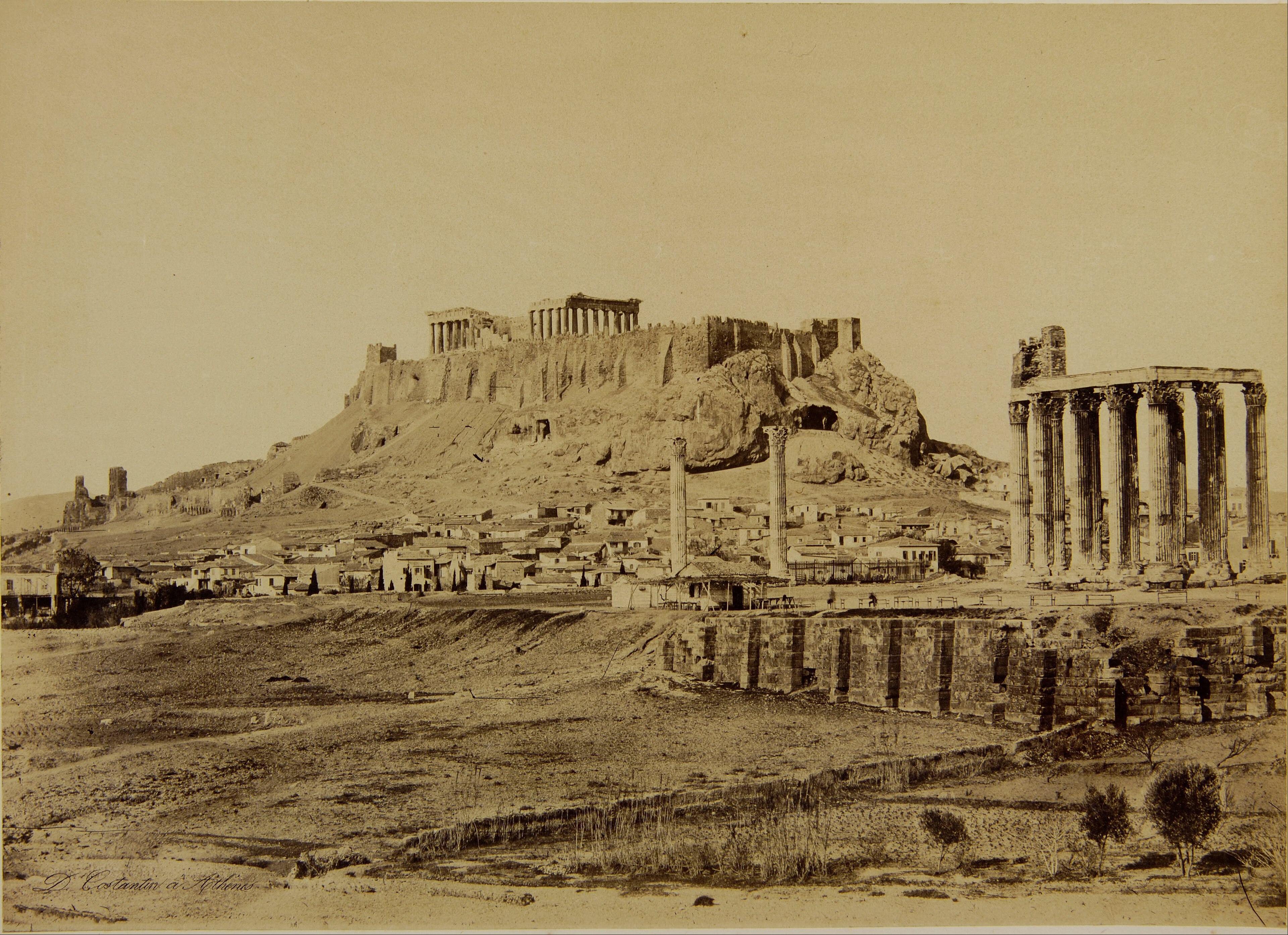
Temple of Olympian Zeus, Athens, Greece, 1865
Source: Constantinou Dimitrios