What Happens Inside a Butterfly Chrysalis?
A caterpillar first attaches itself to a stable surface and sheds its outer skin. The hardened layer revealed underneath becomes the chrysalis, which is the pupa of a butterfly.
Hormonal changes activate enzymes that break down many larval tissues. The caterpillar does not completely dissolve into liquid. Its nervous system, breathing system, and several other structures remain partly organized while extensive reconstruction occurs around them.
Groups of cells called imaginal discs have been present since the insect’s early development. Inside the chrysalis, these cells grow into adult structures including wings, legs, antennae, and eyes.
Stored nutrients from the caterpillar’s period of heavy eating supply energy and raw material. Muscles are rebuilt, reproductive organs mature, and the digestive system changes from one suited for eating leaves to one suited for the adult diet.
Near the end of development, the chrysalis becomes thinner and may reveal the colors of the wings beneath it. The butterfly splits the outer case, emerges, and pumps fluid through the veins of its folded wings. The wings must expand and harden before flight.
A cocoon is different. It is a protective silk covering made by many moth caterpillars around the pupa.
Source: The Life Cycle of a Butterfly, American Museum of Natural History - Monarch Butterflies, Smithsonian Institution
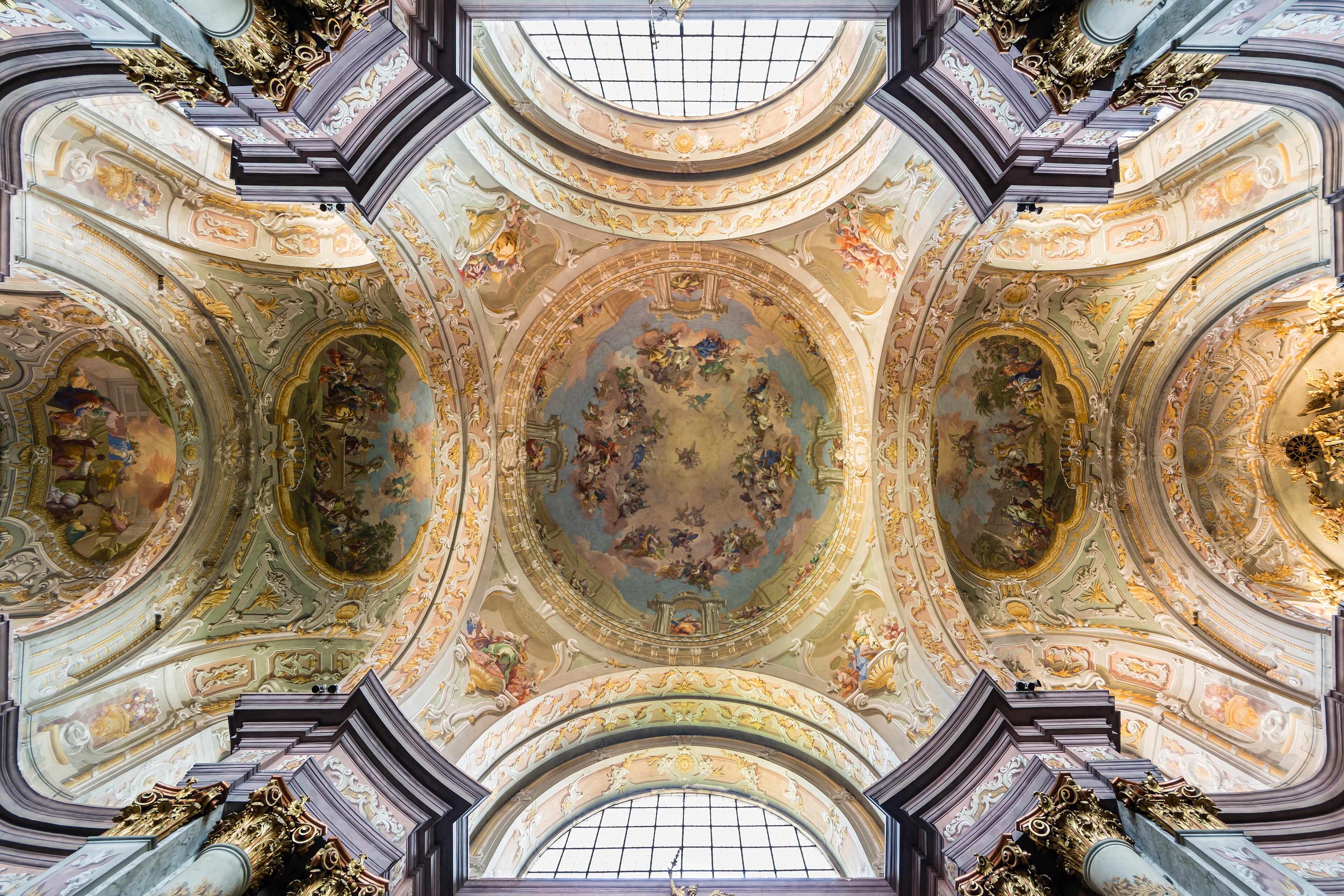
Ceiling frescos in Herzogenburg Abbey Church (Lower Austria)
Source: Daniel Gran and Bartolomeo Altomonte