Who Decided That a Circle Has 360 Degrees?
The division of a circle into 360 degrees developed from ancient Babylonian mathematics and astronomy rather than from one known inventor.
Babylonian mathematicians used a number system based on 60. The number was useful because it can be divided evenly by 2, 3, 4, 5, 6, and many other values. This made fractions and astronomical calculations easier to express.
Babylonian astronomers tracked the Sun, Moon, and planets across the sky. The Sun appeared to complete its circular path through the stars in approximately 360 days. Dividing that path into 360 sections produced a convenient unit for recording positions.
The zodiac was divided into twelve equal signs, each containing 30 degrees. Greek astronomers adopted and expanded this system. Hipparchus and later Ptolemy used Babylonian angle measurements in influential astronomical works.
Each degree was divided into 60 smaller parts. The first division became the minute, and the second became the second. The same base 60 tradition explains why an hour contains 60 minutes and a minute contains 60 seconds.
A circle could have been divided differently, and some modern fields use radians or other units. The 360 degree system survived because it is easy to divide and became embedded in astronomy, navigation, geometry, and mapmaking.
Source: Early Astronomy in the University of Michigan Collections - A History of Ancient Mathematical Astronomy, Otto Neugebauer
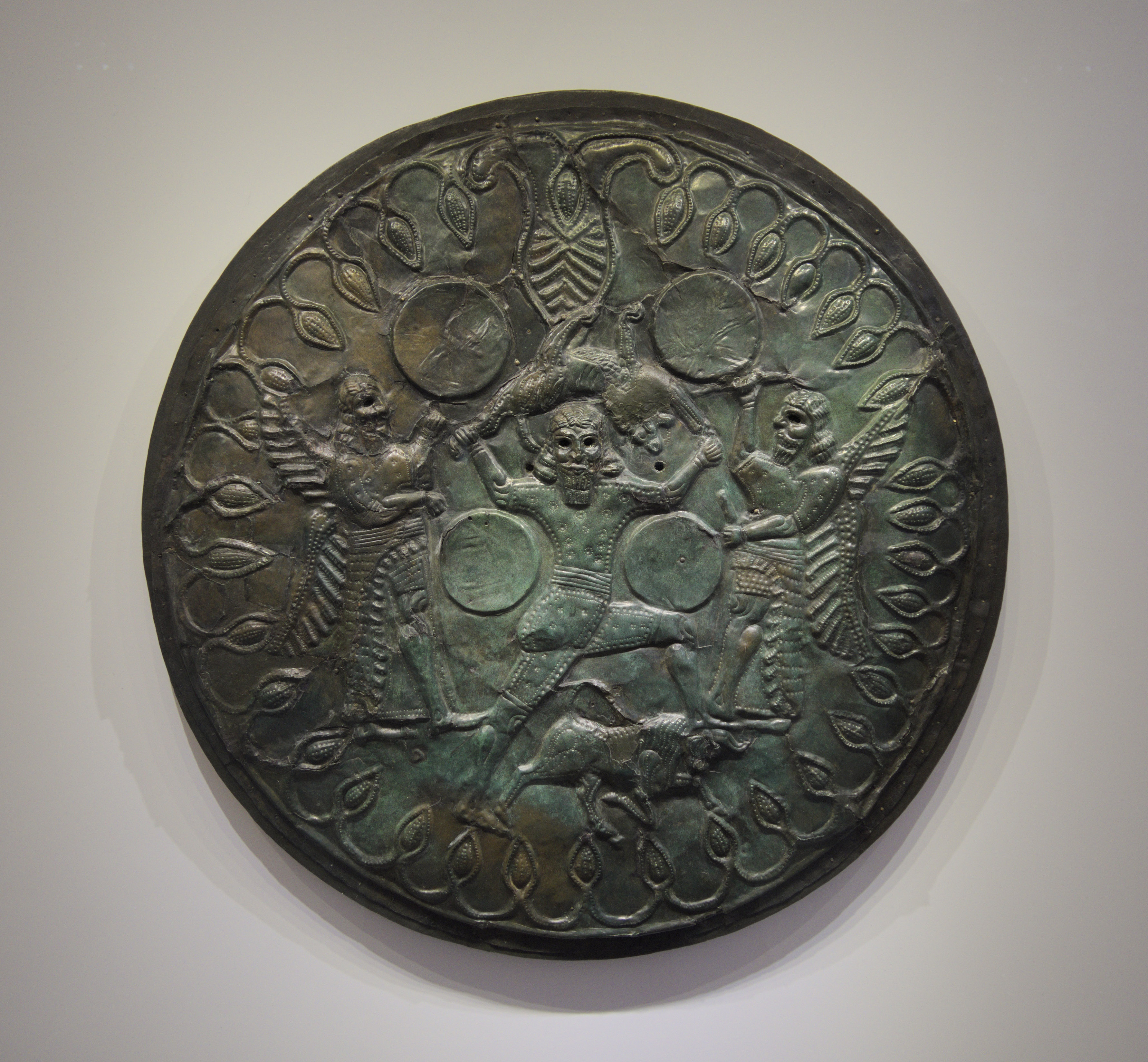
This 8th-century BC Cretan bronze drum depicts Kouretes beating drums to protect the infant Zeus from Kronos