Who Named the Continents?
No single explorer named all the continents. Their names emerged from different languages, legends, mistakes, and political traditions.
Europe and Asia received their names in the ancient Mediterranean world. Their earliest meanings remain uncertain, although Greek writers used them for lands on opposite sides of the Aegean region. Africa may derive from the Roman name for territory around modern Tunisia, which was later extended across the entire continent.
America was named after the Italian navigator Amerigo Vespucci. In 1507, mapmaker Martin Waldseemüller printed the name America on a world map because he believed Vespucci had recognized the newly described lands as a separate continent. The feminine form matched names such as Europa and Asia.
Australia comes from the Latin expression terra australis, meaning southern land. Antarctica uses a Greek derived name meaning opposite the Arctic. The Arctic itself was associated with the northern constellations of the bears.
Continental boundaries are partly cultural rather than purely geological. Europe and Asia form one enormous landmass, yet history usually treats them separately. Some countries teach six continents, while others teach seven.
The names on a modern globe therefore preserve many centuries of changing geographical knowledge rather than one organized naming system.
Source: The Fourth Part of the World, Toby Lester - The History of Cartography, University of Chicago Press
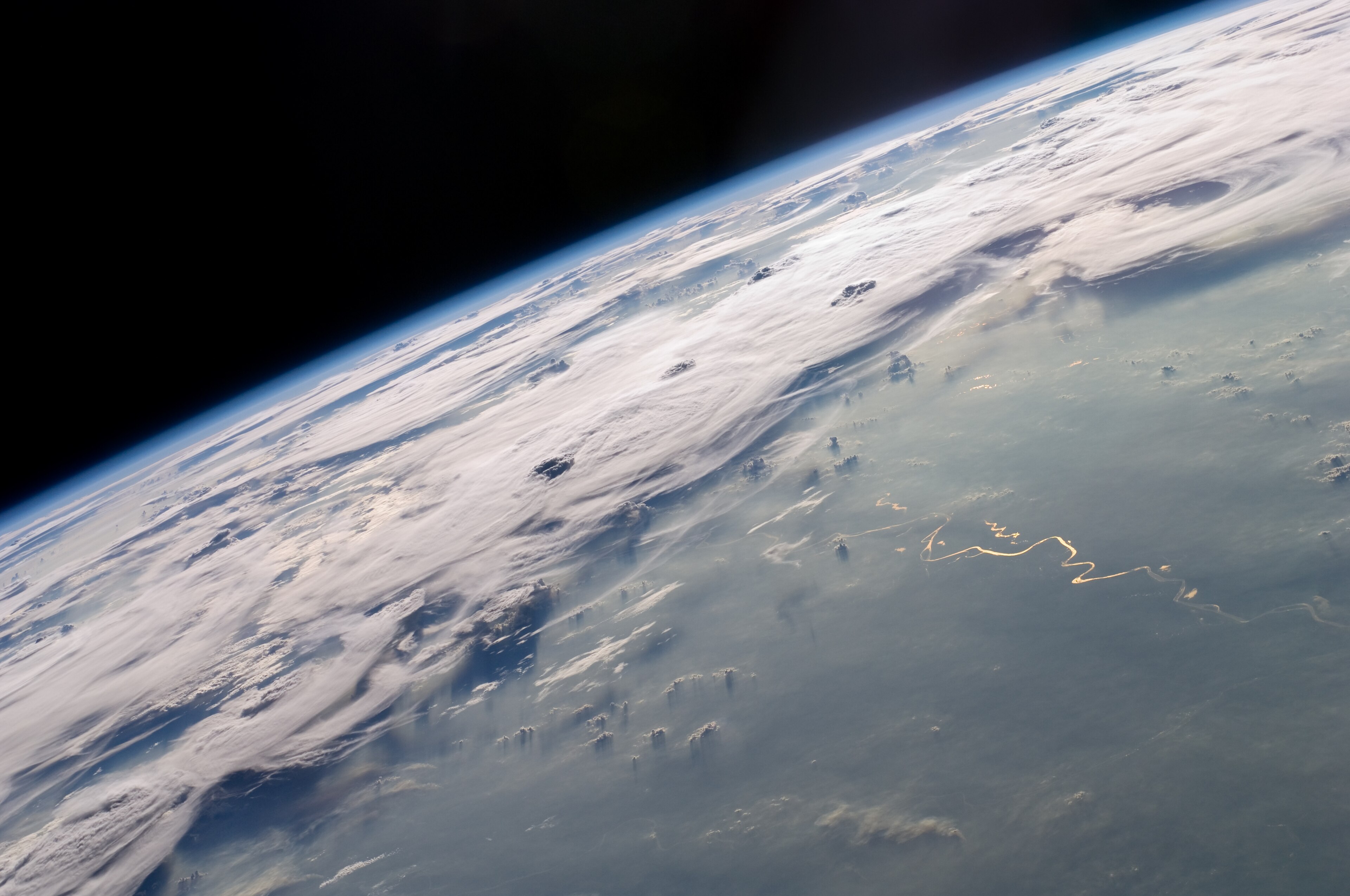
An ISS photograph looking southwest over the Amazon Basin
Source: NASA