Why Does the Sky Change Color at Sunset?
Sunlight looks white, but it contains all the visible colors. The sky becomes blue because Earth’s atmosphere separates those colors without acting like a prism.
When sunlight enters the atmosphere, it collides with nitrogen, oxygen, and other tiny molecules. These molecules scatter shorter wavelengths of visible light much more efficiently than longer wavelengths. Blue light is therefore redirected across the sky and reaches our eyes from every direction.
Violet light has an even shorter wavelength and is scattered more strongly, so the sky might seem as though it should be violet. Several factors prevent that. The Sun produces less violet light than blue, some violet is absorbed in the upper atmosphere, and human vision is considerably more sensitive to blue.
At sunset, sunlight enters the atmosphere at a shallow angle and travels through much more air before reaching us. Most of its blue light is scattered away from the direct path. The remaining sunlight is richer in longer wavelengths, particularly orange and red. Dust, smoke, salt, and water droplets can deepen or broaden those colors, which is why atmospheric conditions affect the appearance of each sunset.
The Sun itself has not changed color. Its light has simply taken a longer route.
Every clear day therefore performs the same transformation twice. The atmosphere that spreads blue light across the daytime sky removes that blue from the direct sunlight at sunset, revealing the warmer colors that were present all along.
Source: David K Lynch and William Livingston, Color and Light in Nature - Craig Bohren, What Light Through Yonder Window Breaks?
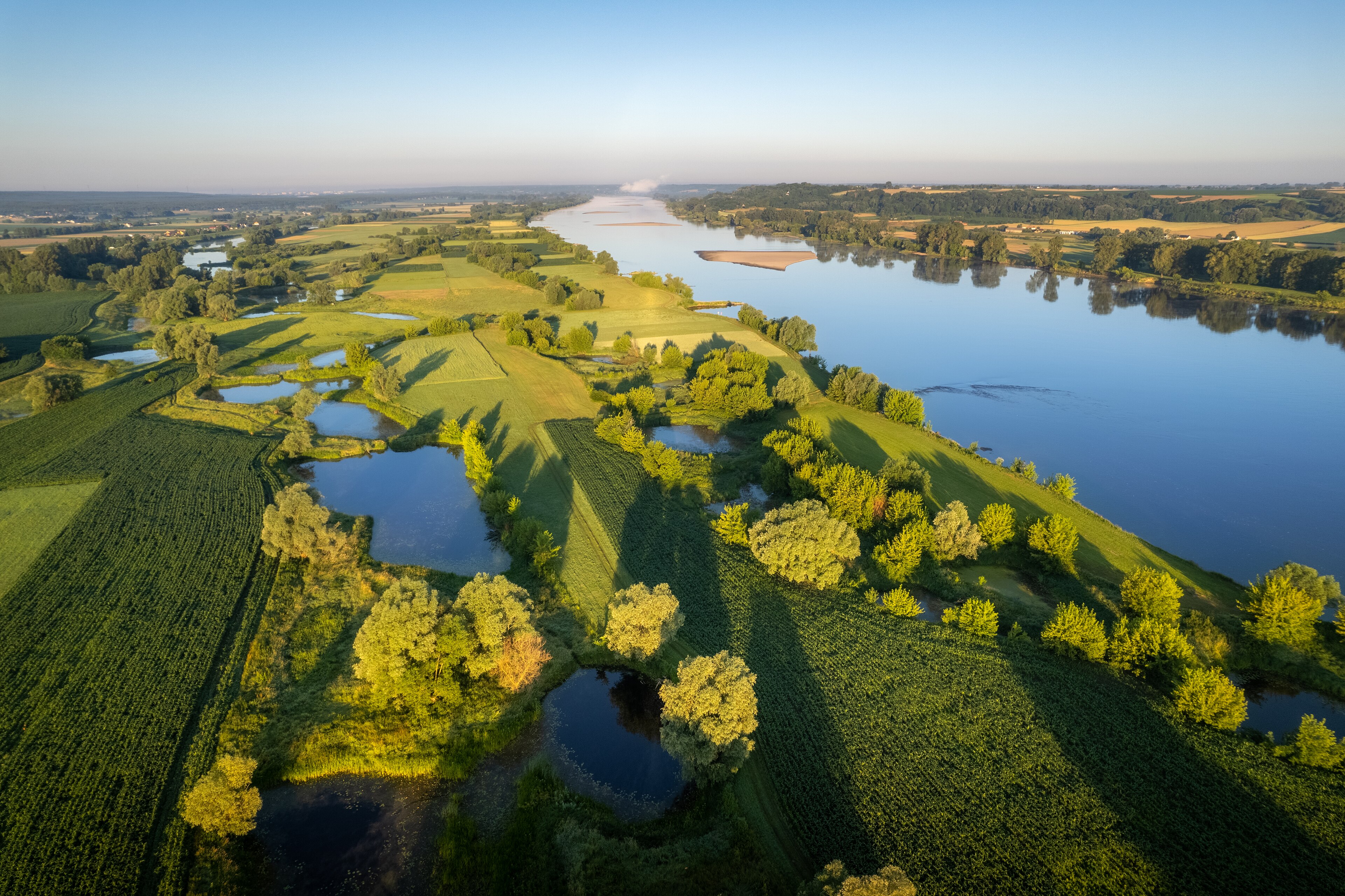
The Lower Vistula Valley in Kokocko, Poland
Source: By Mariusz Guć