Why Does a Spider Not Become Trapped in Its Own Web?
A spider can rush across a web that traps a struggling fly, but it is not simply immune to its own glue.
Orb webs contain several kinds of silk. The lines forming the frame and the spokes are generally dry and provide the web with structural support. The spiral used to catch insects carries tiny droplets of adhesive. A spider moving around its web can often choose the dry lines and minimize contact with the sticky ones.
When it must cross the capture spiral, its movements are careful. It places and removes its feet at angles that limit how much of the leg touches the adhesive. Branched hairs on the legs reduce the area of direct contact and help keep sticky droplets away from the leg surface.
Research on tropical orb weaving spiders found evidence for another defense. Their legs appear to possess a chemical coating that reduces adhesion. When researchers washed this surface, the legs stuck more strongly. The spider’s protection therefore seems to involve both anatomy and behavior, rather than one magical substance that makes its entire body nonsticky.
An insect enters the web very differently. It usually strikes at speed, touching several adhesive threads at once. Struggling can bring more of its wings and body into contact with the glue. The stretchy silk absorbs the impact while the droplets maintain their grip.
Even spiders can occasionally become entangled, particularly if they are injured or forced against the wrong parts of a web.
The web works because its maker understands its layout. To prey, it is an invisible field of traps. To the spider, it is a structure with roads, supports, and dangerous surfaces that must be crossed carefully.
Source: Spider Silk: Evolution and 400 Million Years of Spinning, Leslie Brunetta and Catherine Craig - Why Spiders Do Not Stick to Their Own Sticky Web Sites, Smithsonian Tropical Research Institute
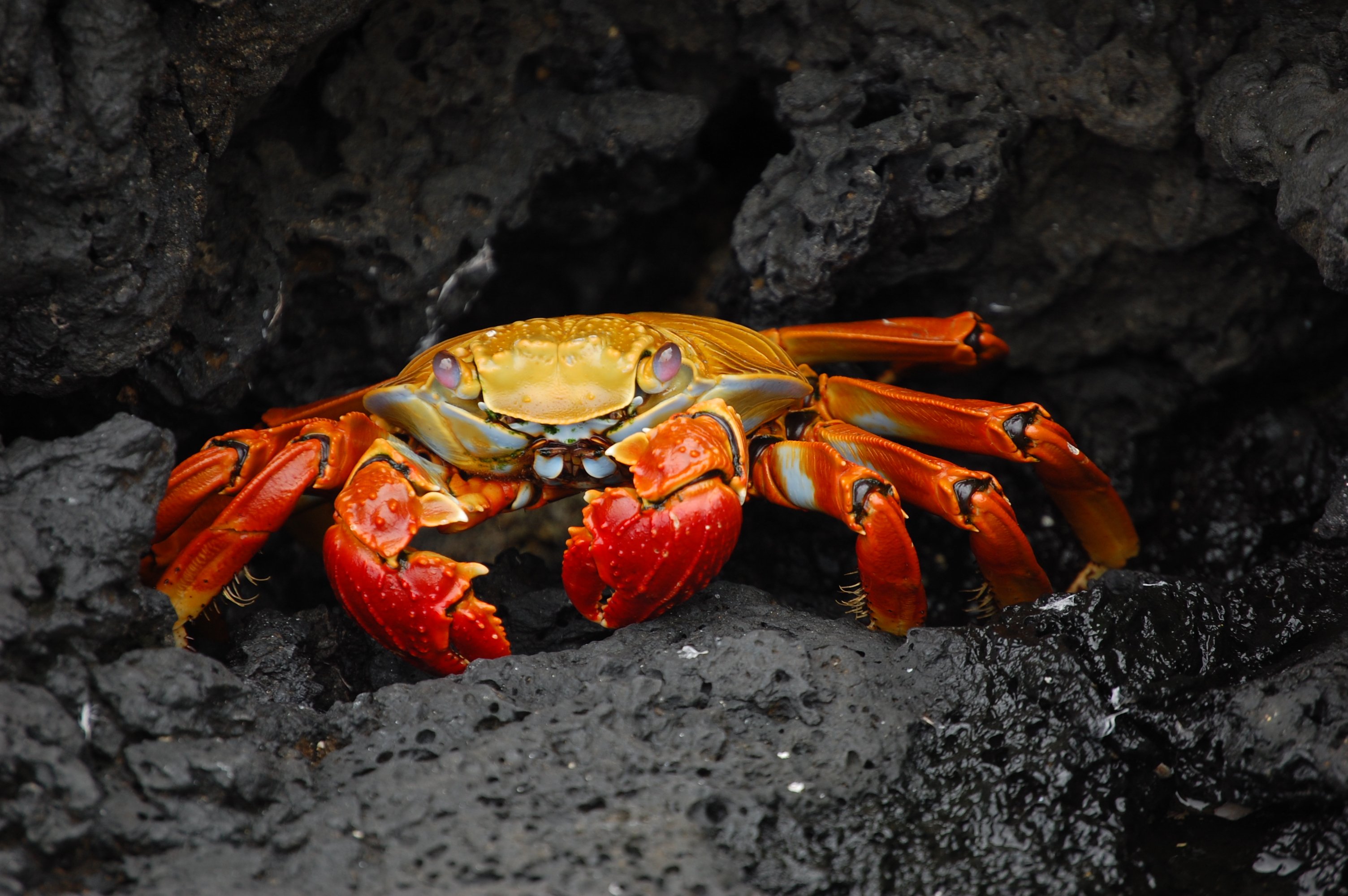
Grapsus grapsus from the Galápagos Islands
Source: By Elizabeth Crapo