Was Greenland Really Given Its Name to Attract Settlers?
Greenland appears to have one of the least accurate names on a map. Most of the island is covered by ice, yet medieval Icelandic tradition says its pleasant name was chosen deliberately.
Around 982, Erik the Red was banished from Iceland for three years following a violent dispute. He sailed west and explored the coast of a land that other Norse sailors had probably seen before him. Although the interior was dominated by ice, parts of the southwestern coast contained sheltered fjords, grass, and summer pasture suitable for livestock.
After his exile ended, Erik returned to Iceland and began recruiting people for a settlement. The Saga of the Greenlanders says he called the country Greenland because people would be more willing to travel there if it had an attractive name.
The story is often presented as history’s first advertising campaign, but it comes with an important caution. The surviving sagas were written centuries after Erik lived. They preserve older oral traditions, yet they cannot reveal his private reasoning with certainty. Greenland may also have seemed reasonably green to Norse settlers arriving at its southern coast during summer.
The name worked, whether through calculated promotion or simple description. In 985 or 986, a fleet reportedly sailed from Iceland. Only fourteen of the twenty five ships completed the journey, but their passengers established Norse communities that endured for centuries.
Greenland was already home to Arctic peoples long before the Norse arrived, and its modern Greenlandic name is Kalaallit Nunaat, the land of the Greenlanders. The familiar English name survives from the Norse episode, carrying a claim that may have been part description, part invitation, and part medieval salesmanship.
Source: The Norse in Greenland, Government of Greenland - The Vikings, Else Roesdahl
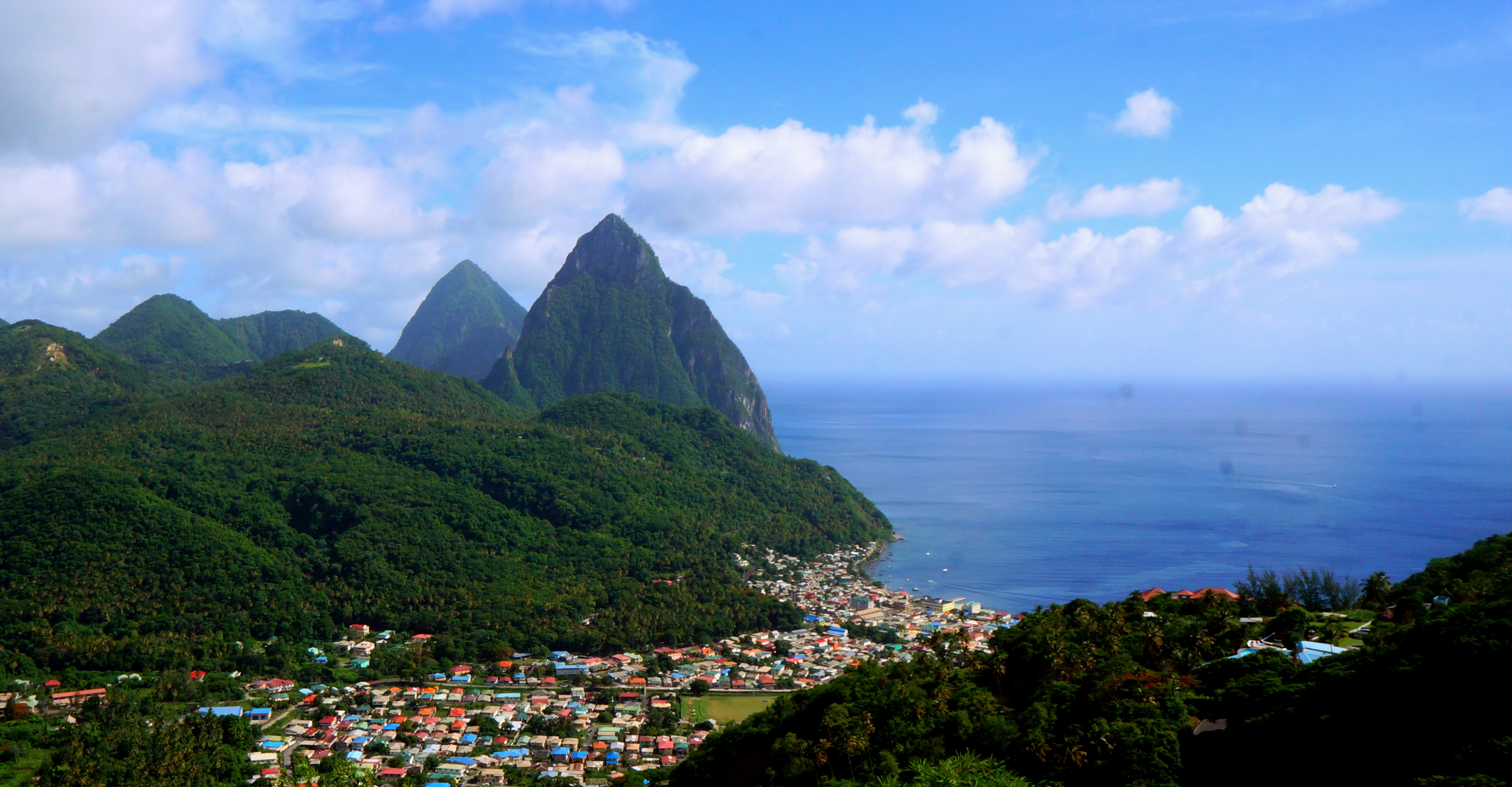
The Pitons, Soufrière, and the Caribbean Sea (UNESCO World Heritage Site)
Source: By Aneil Lutchman