Why Is a 3,000 Year Old Peace Treaty Displayed at the United Nations?
On a wall inside the United Nations headquarters in New York hangs a copper copy of an agreement made more than three thousand years ago. It is the Treaty of Kadesh, one of the oldest surviving peace treaties in history.
The agreement joined two rulers whose empires faced each other across Anatolia and the Levant: Ramesses II of Egypt and Hattusili III, king of the Hittites. Years earlier, Egyptian and Hittite forces had fought an enormous chariot battle near Kadesh, close to modern Homs in Syria. Ramesses covered Egyptian temples with scenes celebrating his courage and victory. Hittite records presented a less flattering outcome for Egypt, and the Hittites retained influence in the region.
Neither empire, however, could afford endless conflict. Egypt faced unrest elsewhere, while the Hittites were increasingly concerned about Assyria. Around 1259 BC, the two kings exchanged silver tablets declaring peace and brotherhood.
The treaty sounds surprisingly modern. Each ruler promised not to attack the other. If a foreign enemy invaded one kingdom, the other would provide troops and chariots. The agreement also addressed fugitives, political refugees and royal succession. Divine curses threatened anyone who broke its terms.
The original silver tablets disappeared, but clay copies were discovered in the archives of Hattusa, the Hittite capital in central Anatolia. Egyptian versions were carved onto temple walls.
The replica at the United Nations is therefore more than an ancient curiosity. It shows that states were negotiating mutual defence, extradition and permanent peace thousands of years before modern international diplomacy existed.
Source: Replica of Peace Treaty between Hattusilis and Ramses II, United Nations - The Ancient Near East, James B. Pritchard
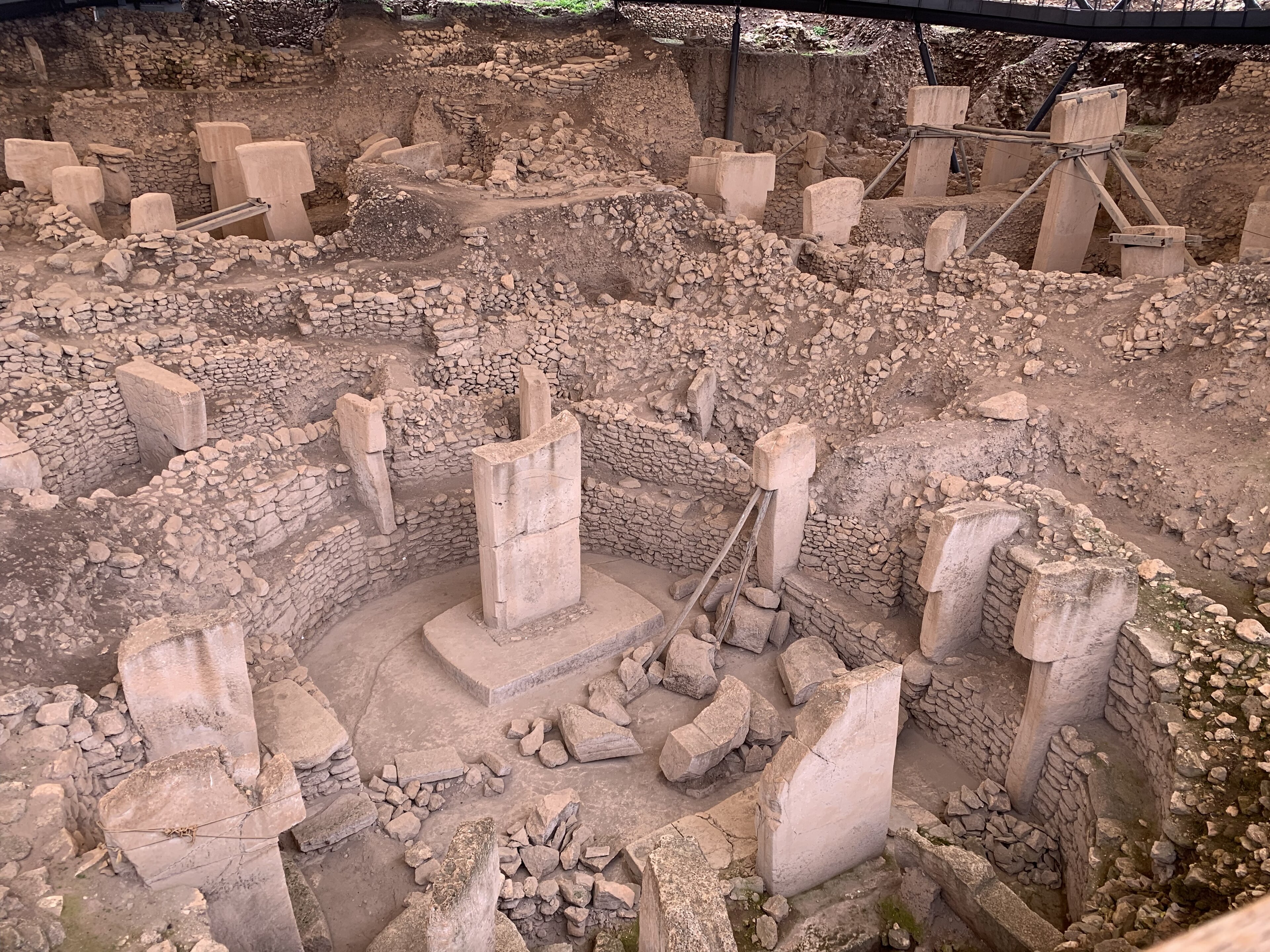
Göbekli Tepe, Şanlıurfa, Türkiye (BCE 9500-8000)
Source: By Beytullah Eles