Why Does a Flamingo Rest More Easily on One Leg Than Two?
A flamingo standing on one leg appears to be performing a balancing act. Research suggests that the posture may actually require less muscular effort than standing on both legs.
Scientists studying live flamingos found that the birds swayed less while standing on one leg, particularly when they were resting. They also examined the bodies of flamingos that had died and discovered something unexpected. A prepared specimen could be balanced securely on one leg without active muscles, but it could not remain stable in the same way on two.
The bird’s joints and body weight appear to create a passive support mechanism. When the leg is positioned beneath the body, gravity helps hold the joints in a stable arrangement. The flamingo does not need to maintain the posture through constant muscular correction.
This does not mean balance requires no nervous control in a living bird. The passive mechanics simply reduce the work required. The posture may also help conserve body heat. Flamingos often stand in water, and pulling one leg into the warm feathers reduces the amount of uninsulated limb exposed to the surroundings. Birds can alternate legs before either becomes excessively cold or stiff.
The one legged stance is therefore not necessarily a test of endurance. For the flamingo’s unusual anatomy, it may be a resting position. What looks difficult from the perspective of the human body can be the mechanically economical choice for a bird built around very long legs.
Source: Science Finally Discovered Why Flamingos Stand on One Leg, Time - Flamingo, San Diego Zoo Wildlife Alliance
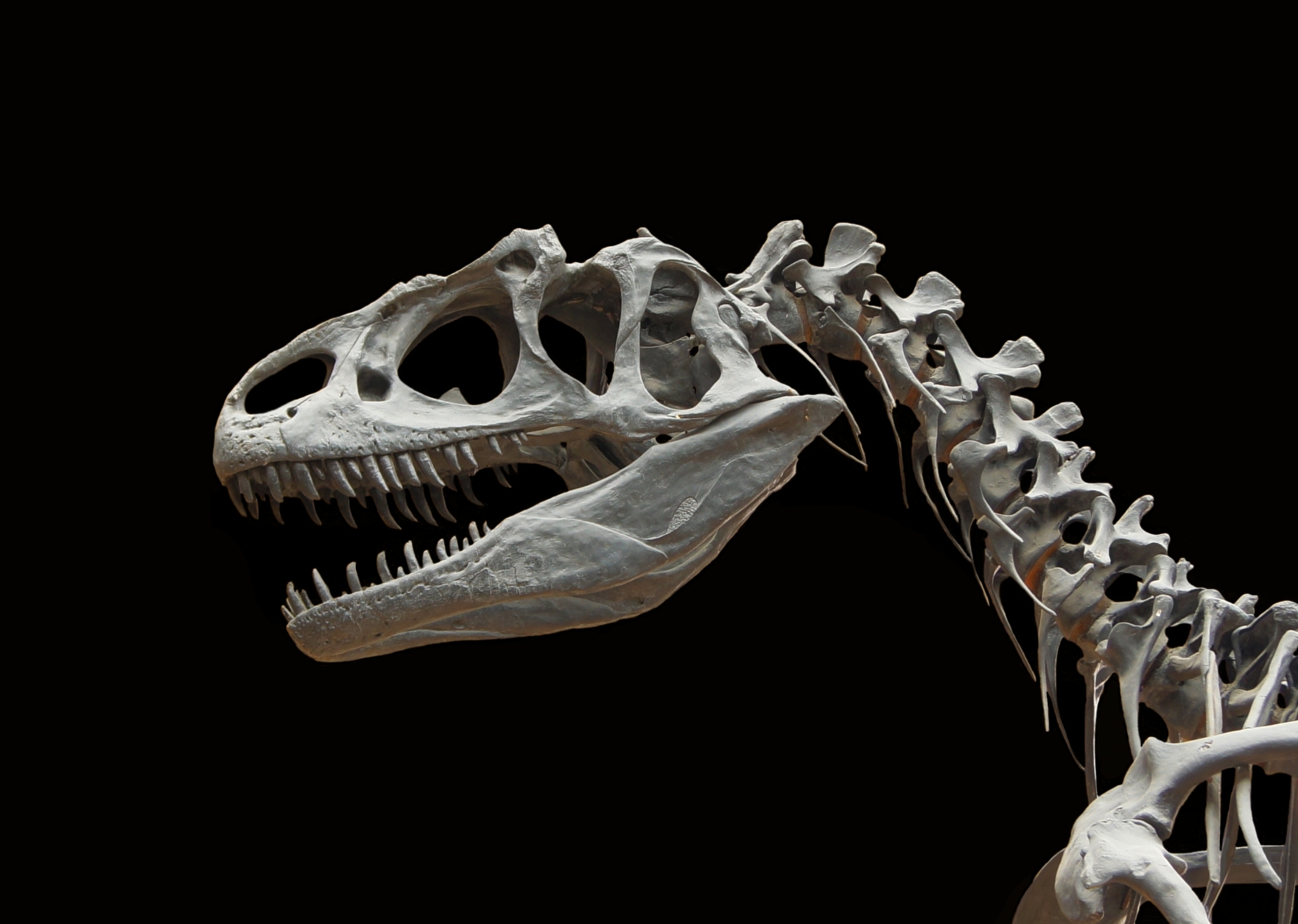
Skull and neck vertebrae cast of an Allosaurus fragilis specimen from Utah, USA (Muséum National d'Histoire Naturelle, Paris, France)
Source: By Jebulon